Inverter vs Non-Inverter Aircond — Which Is Right for Your Malaysian Home?
Working principle, real TNB-bill math for Malaysian usage, upfront cost vs lifetime cost, suitability by room size.
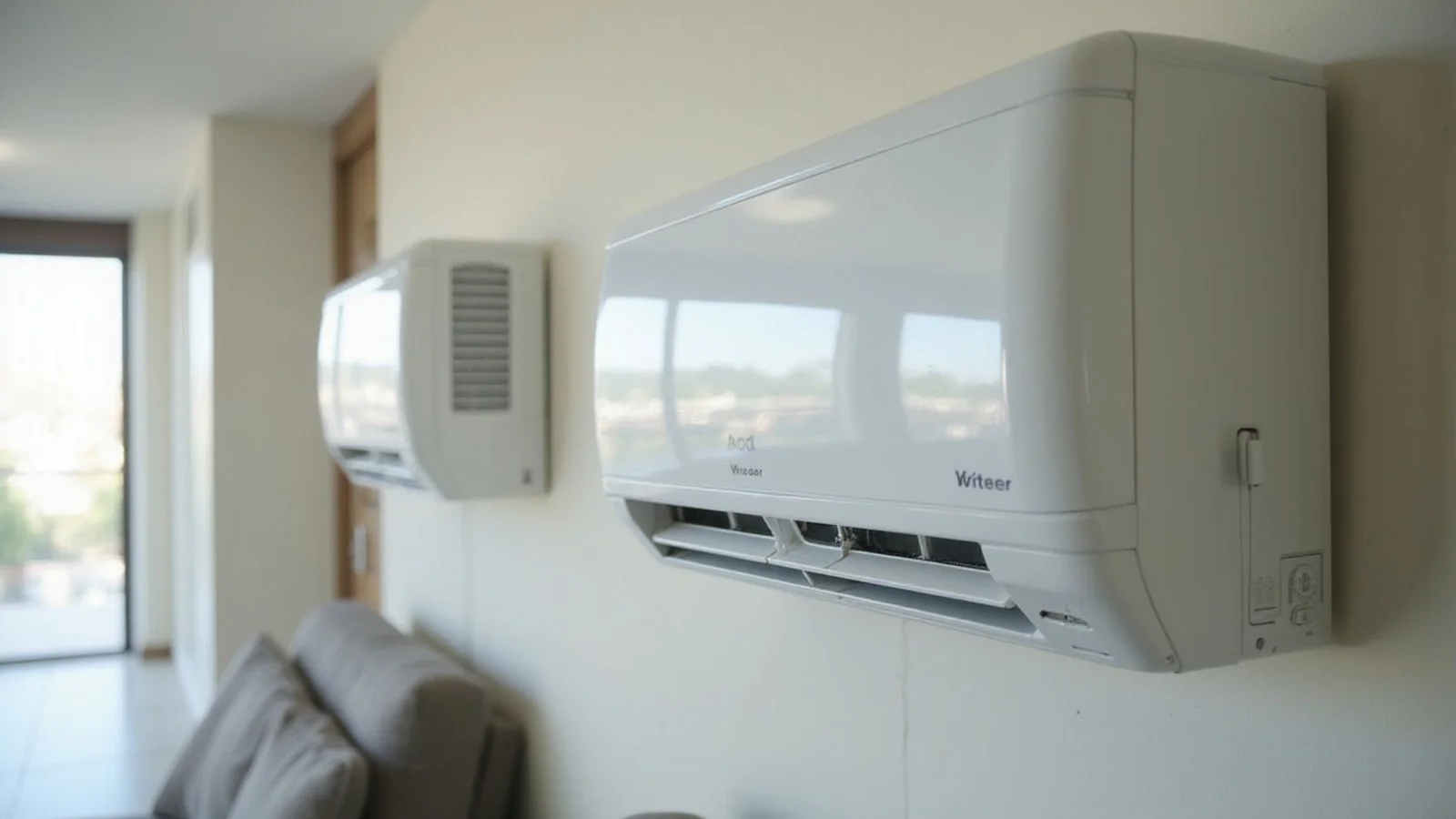
We encounter the inverter vs non-inverter aircond question every time someone replaces an air conditioning unit in Malaysia.
The energy-saving claims are loud, but the upfront cost for these advanced models is noticeably higher. This means the honest question is whether the math actually works for your specific cooling habits.
Our guide breaks down the working difference between the two systems. You will see the realistic TNB bill math for typical Malaysian usage. We also provide a simple suitability framework, so you can decide without buying the wrong unit.
How the Two Systems Actually Differ
The Non-Inverter Approach
A non-inverter aircond runs its compressor at one fixed speed. When the room reaches the set temperature, the compressor switches off completely. When the room warms back up, it switches on again at full speed.
The result is repeated on-off cycling. This process feels comfortable enough, but each restart pulls a massive surge of electricity from your grid. A standard 1.5HP non-inverter unit constantly pulls around 1,400 watts every time it runs.
The Inverter Approach
An inverter aircond uses a variable-speed compressor controlled by a Variable Frequency Drive, or VFD. After the initial high-speed pull-down to the set temperature, the compressor slows to a low-RPM cruise. This cruise mode maintains the room temperature without cycling off.
Our data shows these units can drop their power consumption to just 300 to 500 watts during this maintenance phase. There are no restart surges, which means less compressor wear and a much smoother indoor temperature.
The benefit is absolutely real, but it depends entirely on your usage pattern. You only see savings if the unit runs long enough each session to settle into that efficient cruise state. Short cooling bursts will not give the VFD enough time to lower the power draw.
The Real TNB-Bill Math (Malaysian Usage)
Here is the math for a typical 1.5HP residential split unit, which is the most common size found in Malaysian bedrooms. We calculated these estimates based on the 33 sen/kWh standard residential average tariff and the average daily heat load in Selangor. If your air conditioning usage pushes your total monthly consumption into TNB’s 301-600 kWh tier, your marginal rate actually jumps to 51.6 sen/kWh.
| Usage pattern | Non-inverter monthly run cost | Inverter monthly run cost | Inverter savings |
|---|---|---|---|
| 4 hours/day, evenings only | ~RM75 | ~RM58 | ~RM17/month |
| 8 hours/day, overnight + morning | ~RM150 | ~RM103 | ~RM47/month |
| 12 hours/day, work-from-home | ~RM225 | ~RM146 | ~RM79/month |
| 16+ hours/day, always-on bedroom | ~RM300 | ~RM182 | ~RM118/month |
The numbers show the usage pattern clearly. The more you run the unit, the more the inverter technology saves you. A guest room running two hours a week saves you under RM5 per month, making the upfront premium barely worth it.
Our calculations show a master bedroom running ten hours a day saves you RM70 to RM100 a month. This fast return on investment pays back the price gap within 18 months.
Upfront Cost Gap and Payback Period
You have to weigh those monthly savings against the initial purchase price. The typical retail price gap for a 1.5HP inverter aircond in Malaysia during 2026 is substantial.
- Non-inverter (Daikin, Panasonic, or Mitsubishi entry tier): RM1,400 to RM1,800
- Inverter (same brand mid-tier models like the Panasonic X-Deluxe): RM2,300 to RM2,900
Price gap: roughly RM900 to RM1,200.
Payback Timeline Breakdown
This price difference dictates your payback period at different usage levels.
- 4 hours/day: 4 to 6 years payback. This is often longer than many tenants keep the unit.
- 8 hours/day: 18 to 24 months payback.
- 12+ hours/day: 12 to 15 months payback.
Inverter technology clearly offers better long-term economics for any room that runs more than six to eight hours daily. For short-burst rooms like guest bedrooms or study spaces, a non-inverter is often still the most rational pick. We recommend putting your budget toward the spaces you use the most.
Suitability Matrix by Room
This simple framework helps you map the right technology to the right space in your home.
| Room type | Typical use | Recommended |
|---|---|---|
| Master bedroom | 8-10 hrs nightly | Inverter, payback well inside unit life |
| Kids’ bedroom | 6-8 hrs nightly | Inverter, efficiency + quieter cruise mode |
| Living room (family always there) | 6+ hrs evenings | Inverter, savings + quieter operation |
| Living room (used occasionally) | 2-3 hrs/day | Non-inverter, better upfront value |
| Guest room | under 1 hr/week | Non-inverter, payback never happens |
| Work-from-home office | 9-10 hrs daily | Inverter, fastest payback |
| Small balcony bedroom (low heat load) | 4-6 hrs | Inverter, low cruise consumption shines here |
What Changes for Service and Repair
Inverter and non-inverter units have distinct failure modes that affect your long-term maintenance costs. A standard servicing session in Selangor typically runs between RM80 and RM120, but hardware repairs are a different story.
Non-Inverter Common Failures
These older-style units rely on simple, mechanical parts.
- Capacitor: RM150 to RM250 to swap.
- Contactor: RM150 to RM250.
- Compressor at end of life: RM800+, though you usually replace the unit instead.
Inverter Common Failures
These advanced units act more like computers, which makes their replacement parts pricier.
- PCB (printed circuit board): RM400 to RM1,200 depending on the brand. Daikin main boards, for example, often exceed RM1,000.
- Inverter compressor: Rare, but expect to pay RM1,200+ if it does fail.
- Sensors and thermistors: RM100 to RM250.
The PCB on an inverter is the component most likely to need attention over a ten-year lifespan. It is not a frequent failure, but coastal areas around Klang see higher PCB failure rates due to salt corrosion. When a board fails, it costs significantly more than any standard non-inverter repair.
For a clear sense of when to fix versus replace either type, see our repair vs replacement decision guide. Either way, both system types benefit equally from a regular maintenance schedule. You can review our Selangor aircond service pricing guide to understand what you should budget annually.
Our technicians find that well-maintained units rarely suffer catastrophic board failures.
Refrigerant Choice, R32 vs R410A vs R22
It is highly relevant to mention a quick point regarding both inverter and non-inverter buying decisions. The type of gas your system uses determines its efficiency and repairability.
- R32: This is the current 2026 standard approved by the Department of Environment. It offers better efficiency and is more environmentally friendly. Almost all new units sold today are R32.
- R410A: This was the mid-2010s standard. It is still serviceable but is actively being phased out for new installations.
- R22: This older gas is completely phased out for new installations in Malaysia.
If you have a unit using R22 and it leaks, the refill cost is astronomically high. This gas shortage is one of the primary reasons homeowners are forced to replace a ten-year-old unit. Our advice is simple.
If your current R22 unit develops any refrigerant issue, that is strong evidence to lean toward a full replacement rather than an expensive patch job.
What ML Solution Recommends
In a typical Shah Alam home where you are replacing one or two units, the decision comes down to daily habits. The master bedroom and main living room should absolutely get inverter models. Both of these spaces run long enough hours to make the math work perfectly.
Kids’ rooms should also get inverter units if your budget allows for it. The quieter cruise mode is genuinely nicer for sleep, and you still gain excellent energy savings. Guest rooms or occasional-use rooms are perfectly fine with a non-inverter system.
You can take the price difference and save it for the rooms that actually run every single day. When you are ready to install, WhatsApp us your room dimensions, usage pattern, and current unit model. We can recommend a horsepower size and an inverter or non-inverter pick that fits your actual situation.
There are no commission-driven nudges for whichever brand pays a higher margin. You can easily schedule a same-day diagnostic visit if you are trying to decide between repairing an old unit and replacing it.
Frequently Asked Questions
Are inverter aircond units always cheaper to run?
Yes for sustained daily use (4+ hours running), no for short bursts. The inverter advantage comes from modulating compressor speed instead of cycling on/off — that's only useful when the unit runs long enough to settle into its low-RPM cruise state. Short-burst rooms (like a guest bathroom) don't recover the price premium.
Do inverter airconds break down more often?
Not more often, but failures tend to be PCB-related and pricier per repair (RM400–RM800+ for a PCB swap) than non-inverter capacitor swaps (RM150–RM250). Factor that into the total-cost-of-ownership math, especially for older units.
Is my old non-inverter aircond worth keeping?
If it's under 8 years old and still cooling well, yes — replacing on inverter marketing alone usually doesn't pay back. Replace at end of life (10+ years non-inverter, when a major component fails), not on a hypothetical efficiency calculation.
Need an aircond specialist in Shah Alam?
Same-day response for Seksyen 18 and surrounding areas. Send a quick WhatsApp message with your unit's HP and a photo for a fair, upfront quote.