Signs Your Aircond Compressor Is on Its Way Out
Loud start hum, breaker tripping, warm air despite running, oil staining — 6 signs your aircond compressor is failing.
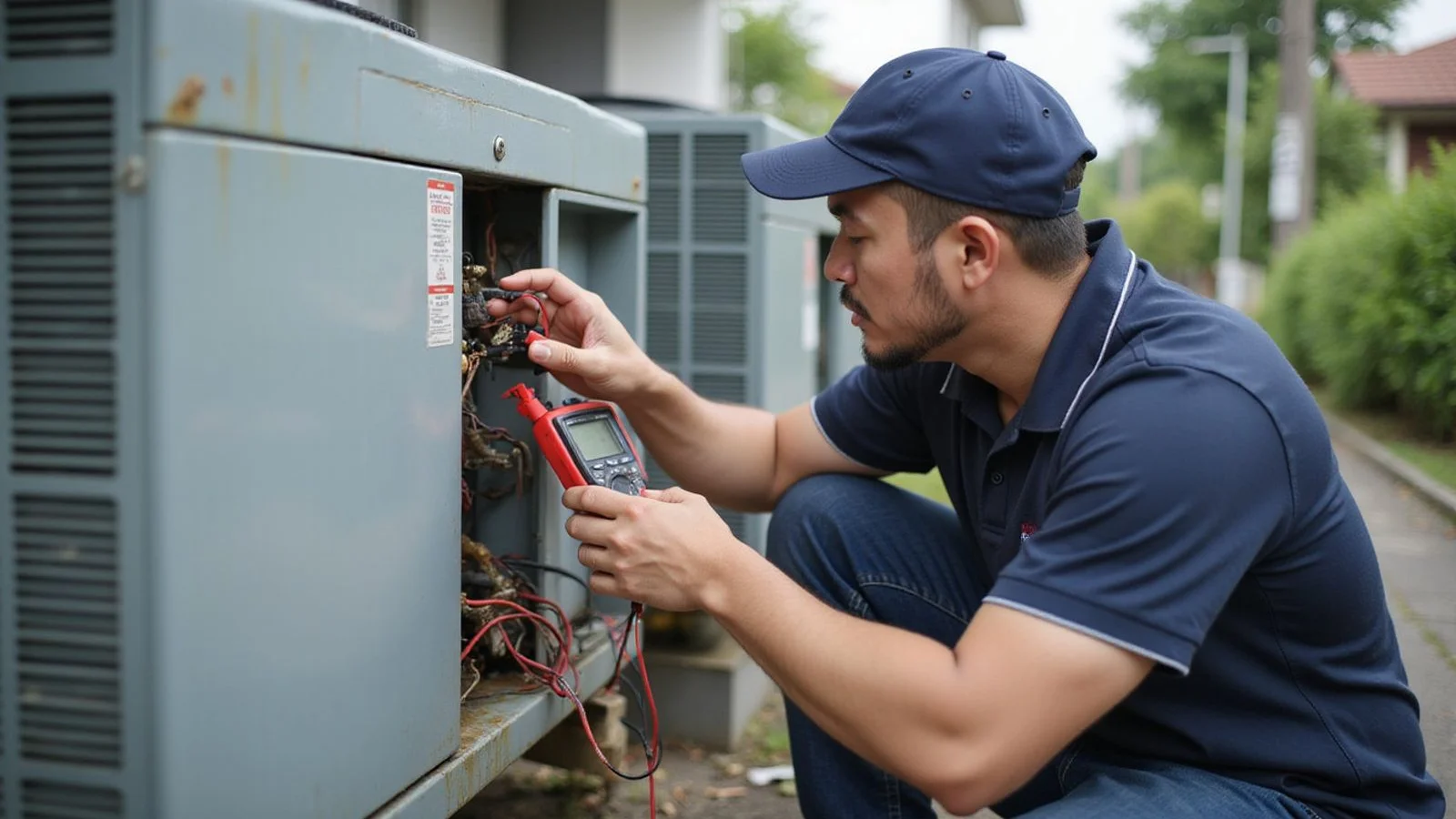
We understand the sinking feeling of a warm room when your cooling system gives up. Spotting the early aircond compressor failing signs is crucial. That compressor acts as the heart of your entire unit.
Our experience shows it is also the most expensive single component to replace. A quick diagnosis provides a two to four-week window to weigh a repair against a full replacement.
Ignoring these warnings often leads to a complete breakdown on the hottest day of the month.
This guide outlines six clear symptoms of a failing compressor. We will explain the specific diagnostic tests required to confirm the issue. You will also get a practical breakdown of your real options.
1. Loud Hum on Startup Without the Unit Kicking In
A loud hum from the outdoor unit without the fan spinning usually means the motor cannot generate enough torque to start. A compressor not starting aircond scenario typically involves a distinct buzzing sound lasting five to fifteen seconds before clicking off.
Our technicians often trace this back to two main culprits. A failing capacitor is a fast and affordable fix. Degraded compressor windings mean an expensive full unit replacement.
Capacitor failure happens frequently in Malaysia due to the constant heat. We usually test the microfarad rating using a multi-meter to pinpoint the exact fault.
The Capacitor vs Compressor Test
A standard 35/5 µF dual run capacitor loses its electrical charge capacity over time. You can sometimes spot a bad capacitor visually if the top casing looks bulged or swollen. Replacing a worn capacitor costs around RM150 to RM250.
If the capacitor tests perfectly, the compressor windings have likely burnt out. We cannot repair internal windings, making a full replacement necessary.
2. Breaker Tripping When the Compressor Cycles On
Every time the compressor attempts to kick on, it pulls too much current and trips the circuit breaker. This immediate power cut is a strong indicator that the compressor windings are degrading or short-circuiting.
Our teams see this happen frequently when older units try to pull their maximum Locked Rotor Amps just to start. A healthy aircond compressor might draw five to eight amps while running. A failing unit pulls thirty amps or more, instantly tripping a standard 20-amp Miniature Circuit Breaker.
You must stop running the unit immediately. Repeatedly resetting the breaker accelerates compressor failure and risks an electrical fire.
Diagnosing the Trip
We verify this fault by taking an amp-draw reading directly on the compressor power lines. An unusually high spike clearly distinguishes a failing compressor from a simple weak circuit breaker.
Never swap a tripping 20-amp breaker for a 30-amp version to force the unit to run. That bypasses a critical safety feature and will melt your wiring.
3. Warm Air Despite the Unit Running Constantly
A steady stream of warm air from the indoor unit means the compressor has stopped pushing refrigerant through the cooling cycle. The indoor fan continues to blow because it uses a separate motor, but no actual refrigeration occurs.
Our baseline test for cooling efficiency looks for a specific temperature drop. A healthy modern unit running R32 refrigerant should produce air that is 10 to 12 degrees Celsius colder than the room’s intake air. If the air feels like room temperature, the primary cooling mechanism has failed.
How to Verify the Issue
You can quickly check the two copper pipes at the outdoor unit. One pipe should feel hot to the touch, while the other feels cold and sweaty. Both pipes sitting at room temperature confirms the cooling cycle has halted.
We always distinguish between a simple loss of gas and a total compressor failure. An empty R32 system requires finding the leak and refilling the gas. A seized compressor that refuses to pump requires a complete unit replacement.
4. Oil Staining Around the Outdoor Unit
Brown or amber residue coating the outdoor casing indicates that essential refrigerant oil is escaping. Healthy compressors operate as sealed systems and should never leak their internal lubricant.
Our mechanics know that modern systems rely on specific lubricants like Polyolester oil to keep internal parts moving smoothly. This oil mixes directly with the pressurized refrigerant. Visible wet patches mean a seal has ruptured or a copper line has cracked.
The Lubrication Problem
These oil stains act like a magnet for environmental dust and dirt. As the system loses lubrication, internal friction rapidly destroys the moving parts. A compressor operating without enough oil will completely seize up within weeks.
We generally advise against pouring money into a leaking, five-year-old compressor. Finding heavy oil stains pushes the math to a full replacement. You can evaluate your options using our repair vs replacement framework.
5. Hard-Start Sounds
A heavy, struggling groan on startup shows that the internal start windings are severely degraded. This noise is typically much lower in pitch and lasts longer than the standard gentle hum of a healthy unit.
Our diagnostic teams often notice the house lights dimming simultaneously. This happens because the struggling motor pulls excessive current, causing a brief voltage drop across your home’s 240V electrical system. The compressor manages to get going, but it consumes more power and stresses related components every single time.
Temporary Fixes vs Permanent Solutions
Older non-inverter systems can sometimes benefit from adding a 5-2-1 hard start kit to provide an extra electrical boost. This aftermarket start relay helps a tight compressor turn over.
We view this as a temporary patch rather than a permanent cure. A hard-starting system usually sits about four to eight weeks away from total failure. Booking an inspection quickly is essential.
6. Ice on Outdoor Pipes (Indicates Low Pressure)
Frost building up on the larger copper pipe means your refrigerant is boiling at the wrong stage of the cooling cycle. This visible ice on a hot 35-degree Celsius afternoon is a definitive sign of an aircond compressor problem.
Our pressure gauges often reveal a significant drop on the low-pressure side. A healthy R32 system running in typical Malaysian weather should read between 135 and 155 PSI. When the compressor fails to maintain this pressure, the internal temperature drops below freezing, causing ambient humidity to freeze directly onto the pipes.
Proper Ice Management
Never try to chip the ice away with a hard tool. The copper pipes are thin, and a single puncture will release the remaining refrigerant into the atmosphere. Let the ice melt naturally while waiting for an inspection.
We use advanced digital gauges to measure the exact pressure imbalance. This test clearly separates a standard gas leak from a compressor that is slowly losing its pumping capacity.
Diagnostic Tests ML Solution Runs for Aircond Compressor Failing Signs
Booking a diagnostic visit is the only way to separate a minor electrical glitch from a catastrophic failure. Many Selangor homeowners search for tanda compressor aircond rosak online, only to misdiagnose a cheap capacitor issue as a dead motor.
Our technicians arrive equipped with precise tools to give you an accurate answer. Professional-grade Fluke True-RMS multimeters allow us to capture exact electrical measurements.
We execute the following checks to confirm the exact fault:
- Capacitor microfarad reading: Verifies if the start capacitor holds its required electrical charge.
- Electrical contactor test: Checks the magnetic coil and contacts for pitting or burning.
- Refrigerant pressure check: Uses Fieldpiece digital manifold gauges to read the exact high and low-side pressures.
- Amp-draw test: Measures the precise current the compressor pulls during a start attempt.
- Visual inspection: Scans for obvious oil staining, physical casing damage, and secure mounting.
- Listen test: Identifies abnormal start delays or internal mechanical grinding.
A proper diagnostic separates the RM200 fixes from the expensive full replacements. We ensure you never replace an entire outdoor unit when a simple electrical swap would restore full cooling.
The Repair vs Replace Math for Compressor Failures
A confirmed failure forces a tough financial decision regarding your cooling setup. Old hardware consumes significantly more power, which heavily impacts your monthly bills under the 2026 TNB tariff blocks.
Our financial breakdown compares immediate repair costs against long-term energy savings. The top TNB domestic tier now charges 57.1 sen per kWh, making an inefficient older unit a massive financial drain. Upgrading to a modern, Suruhanjaya Tenaga 5-star rated inverter unit often pays for itself through lower electricity bills.
Cost Analysis Table
| Unit Age | Repair Cost | Replacement Cost | Recommendation |
|---|---|---|---|
| Under 5 years | RM800 to RM1,200 | RM2,500 to RM3,500 | Repair (Usually covered under warranty) |
| 5 to 8 years | RM800 to RM1,200 | RM2,500 to RM3,500 | Borderline. Consider the TNB efficiency gains. |
| 8 to 10 years | RM800 to RM1,200 | RM2,500 to RM3,500 | Lean to replacement. Parts become scarce. |
| 10+ years | RM800 to RM1,200 | RM2,500 to RM3,500 | Replace entirely. Do not waste money on obsolete tech. |
We find that inverter compressor replacements carry a higher premium. The bare inverter compressor part alone costs between RM1,000 and RM1,500. This steep price tag heavily shifts the math to a full replacement for any unit older than eight years.
Urgency Rating: How Much Time You Have
A compressor showing early warning signs gives you a brief window to plan your next steps. Continuing to run the system during Shah Alam’s 35-degree Celsius afternoon heat drastically shortens this timeline.
Our repair crews categorise urgency based on the specific symptom. A total failure requires a prompt response because ordering replacement parts typically takes two to three days.
Estimated Failure Timelines
- Hard-start or loud startup hum only: 4 to 8 weeks before the motor seizes completely.
- Tripping breaker on cycle: 1 to 4 weeks, with a high risk of electrical damage.
- Oil staining visible: 2 to 6 weeks, depending on the volume of lost lubricant.
- Ice on outdoor pipes: 2 to 8 weeks before the internal pressure completely collapses.
- Multiple symptoms together: Days to a single week.
We highly recommend turning off the system entirely at this stage. You must book a diagnostic immediately if two or more of these warning signs appear. Those combined symptoms indicate that a complete mechanical breakdown is imminent. If your unit presents other strange audio cues, please consult our guide on an aircond making strange noises.
Bridge to Diagnostic Call
Confirming these aircond compressor failing signs is the first step in restoring your home’s comfort. An RM80 diagnostic visit provides absolute clarity without any guesswork.
Our standard inspection delivers several key benefits for homeowners:
- A confirmed cause pinpointing the exact component failure.
- A transparent quote outlining the specific parts and labour.
- A data-driven opinion on repairing versus replacing.
- Zero pressure to commit during our visit.
We want you to review the numbers and make the best decision for your property. If a new system makes the most financial sense, our team can recommend reputable installers.
Getting the right horsepower sizing for your specific room layout is crucial.
WhatsApp +60 17-256 3432 with your unit’s age, brand, and symptom for a same-day Shah Alam visit.
Frequently Asked Questions
How much does it cost to replace an aircond compressor in Malaysia?
Compressor itself: RM600–RM1,200 depending on brand and HP. Labour: RM200–RM400. Total RM800–RM1,600, usually only worth it on units under 8 years old. On a 10+ year non-inverter, replacement of the whole unit at RM2,000–RM2,500 installed is usually the better economic decision.
Can a failing aircond compressor be repaired or only replaced?
Hermetically sealed residential compressors are replace-only — they can't be opened for internal repair. However, the surrounding circuit (capacitor, contactor, PCB, sensors) can be repaired or replaced individually, and that fixes many problems people attribute to compressor failure.
Will my whole aircond die if the compressor goes?
Functionally yes — no compression means no cooling. The indoor fan still works (you can use it as a regular fan), but no cold air. The good news is failing compressors usually give 2–4 weeks of warning signs, so you have time to plan the repair-or-replace decision instead of being stuck in a hot room with no options.
Need an aircond specialist in Shah Alam?
Same-day response for Seksyen 18 and surrounding areas. Send a quick WhatsApp message with your unit's HP and a photo for a fair, upfront quote.