The Most Common Residential Aircond Problems
Top 10 aircond issues: not cooling, leaking, noise, won't start, tripping breaker, ice, weak airflow. DIY vs call-a-pro.
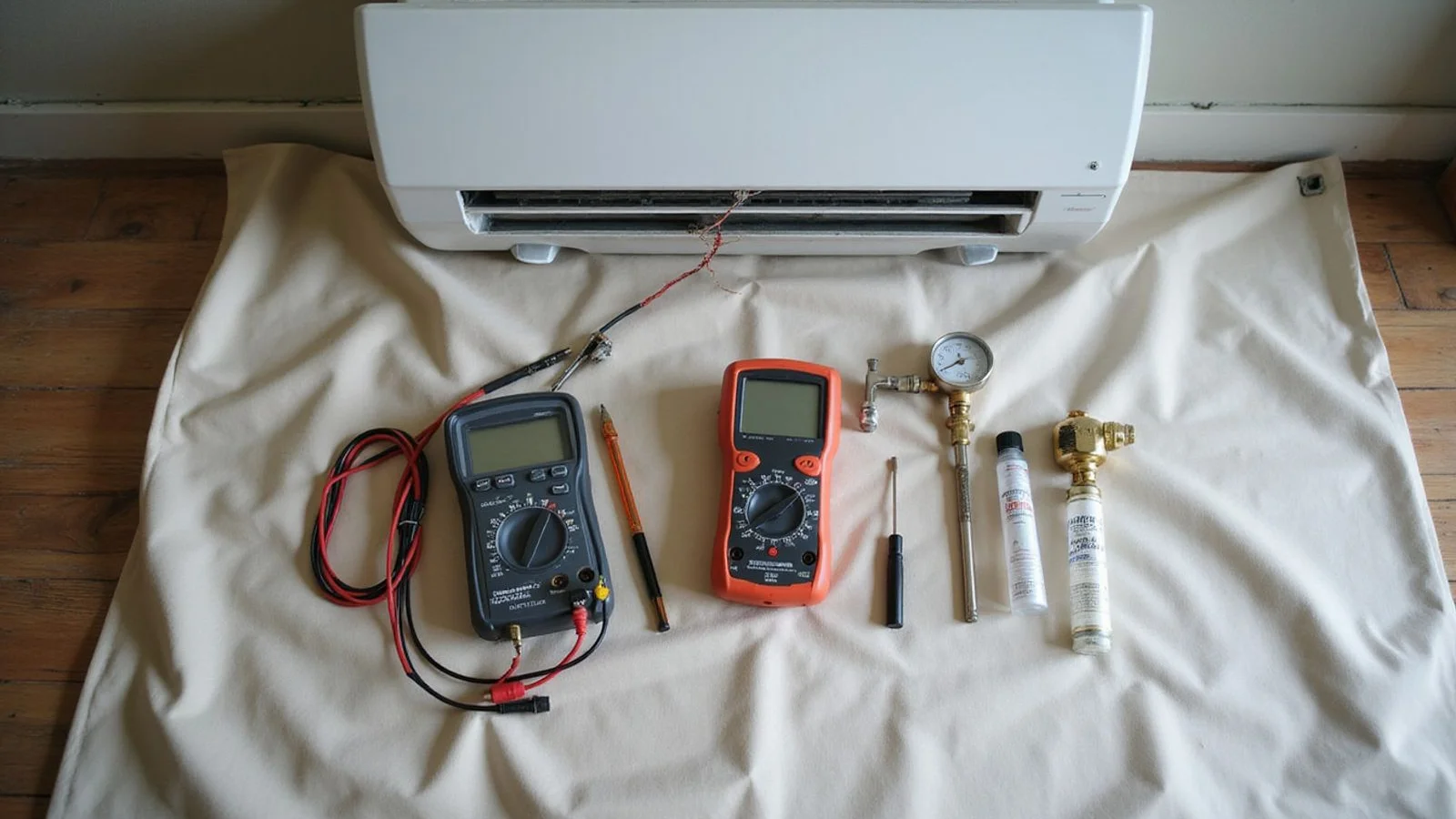
We see the same cooling issues every single day across Selangor. You know how quickly our high-humidity environment can turn a minor condensation glitch into a massive headache. This guide breaks down the common aircond problems, often called masalah aircond biasa, that homeowners actually face.
Our team created this complete aircond problems list to help you triage symptoms before booking a diagnostic. Understanding these split unit aircond issues will save you from paying for the wrong repair.
Let’s look at the actual causes behind these failures and explore practical ways to respond.
1. Aircond Not Cooling
What you notice: The unit runs, but the room barely gets cold. This specific symptom means your system has lost its heat transfer capability or airflow is severely restricted.
We find that over 70% of these calls simply require a deep clean rather than a mechanical repair. A dirty filter, fouled coils, low refrigerant, a failed capacitor, or a blocked outdoor condenser are the most common culprits. You can see the complete diagnosis matrix in our guide to aircond not cooling causes.
Key Action Steps and Costs:
- DIY check: Verify the filter is clean and the outdoor unit is clear of debris.
- Common misconception: Many people assume they need a gas refill, but modern R32 refrigerant systems rarely leak without a physical pipe issue.
- Cost range: RM80 to RM150 for basic cleaning or capacitor swaps, up to RM500 for complex leaks.
2. Water Leaking Indoors
What you notice: Water drips steadily from the indoor unit onto your floor, window frame, or wall. This happens when condensation cannot escape through the intended drainage path.
Our technicians frequently see high humidity in Malaysia causing thick algae slime, often called jelly, to form in the drain pan. This jelly blocks the drainage line, which is the most frequent cause of indoor leaks. Other triggers include a dirty filter freezing the coil, a cracked drain pan, or low refrigerant. Read the full breakdown in our aircond leaking water causes resource.
Key Action Steps and Costs:
- DIY check: Use a wet-vac on the external PVC drain outlet to suck out the algae blockage.
- Maintenance tip: Flushing the drain pipe during a chemical wash prevents this jelly buildup entirely.
- Cost range: RM120 to RM160 for a drainage flush or chemical wash, up to RM400 for drain pan replacements.
3. Strange Noises (Clicking, Grinding, Hissing, etc.)
What you notice: Unusual, disruptive sounds come from either the indoor or outdoor unit. A grinding noise usually indicates a failing motor bearing, while a hissing sound points to a refrigerant leak.
We rely on sound to diagnose several mechanical failures quickly. The exact issue depends entirely on the sound profile, ranging from a failing capacitor to worn blower bearings, drainage bubbles, or loose mounting brackets. You can listen to specific examples in our aircond strange noises guide for a complete sound-by-sound breakdown.
Key Action Steps and Costs:
- DIY check: Perform a visual inspection of the mounting brackets to ensure they are tight and secure.
- Warning sign: Ignoring a loud clicking sound often leads to a completely burnt-out capacitor within a few days.
- Cost range: RM150 for minor capacitor swaps, up to RM800 for replacing major components like the blower motor.
4. Aircond Won’t Turn On
What you notice: Remote presses do absolutely nothing. There is no fan movement, no compressor hum, and no indicator lights blinking on the indoor unit.
Our team often traces total power failure back to severe electrical surges during heavy thunderstorms in Selangor. The likely causes include a tripped breaker, dead remote batteries, a failed PCB (printed circuit board), a loose wiring connection, or a blown internal fuse. Frequent power fluctuations degrade the sensitive components on modern inverter PCBs over time.
Key Action Steps and Costs:
- DIY check: Reset the electrical breaker, replace the remote batteries, and check if other appliances on the same circuit work.
- Component detail: Original replacement boards for major brands cost significantly more than universal boards.
- Cost range: RM80 for a basic diagnostic visit, scaling up to RM450 to RM800 for a full PCB replacement.
5. Tripping the Circuit Breaker
What you notice: The breaker trips the moment the unit runs, or it trips intermittently after a few minutes of cooling. This is a deliberate safety mechanism activating to prevent an electrical fire.
We strongly advise against repeatedly resetting a breaker that keeps tripping. A failing compressor drawing excessive amps, a direct short circuit inside the unit, an undersized breaker, or wet electrical connections are the primary culprits. Forcing the system to restart under these conditions will melt wires and permanently destroy the compressor.
Key Action Steps and Costs:
- DIY check: None. This is a severe electrical fault requiring a multimeter and professional safety gear.
- Urgency level: High. Leave the switch off and call a certified technician immediately.
- Cost range: RM150 to RM250 for fixing loose connections or faulty sensors, exceeding RM800 if the compressor requires replacement.
6. Ice Forming on Indoor Coil or Pipes
What you notice: White frost or thick ice becomes visible on the indoor copper coil or the exterior pipes. This freezing occurs when the refrigerant absorbs heat but the air cannot circulate over the coils properly.
Our service data shows that restricted airflow is responsible for most frozen coils. A severely blocked air filter or a fouled evaporator coil lets the internal temperature drop below freezing. Low refrigerant pressure from a system leak is the second most common trigger, causing the same freezing effect along the copper lines.
Key Action Steps and Costs:
- DIY check: Switch the unit off, let the ice thaw completely for one to two hours, clean the filter, and then restart.
- Pro tip: Never use a hairdryer or sharp object to remove the ice, as this easily punctures the delicate aluminum fins.
- Cost range: Free if a dirty filter is the cause, but ranging from RM400 to RM700 for detecting and sealing a refrigerant leak.
7. Weak Airflow From Vents
What you notice: The fan runs loudly, but the unit barely pushes any cold air into the room. This symptom means a physical barrier is blocking the wind or the blower wheel cannot spin at full speed.
We frequently resolve this issue by removing thick layers of dust caked onto the cylindrical blower wheel. A blocked filter, a heavily fouled coil, a failing blower motor, or an obstruction in the internal ducting are the standard causes. When the blower wheel fills with dust, the blades physically cannot scoop and push the air forward.
Key Action Steps and Costs:
- DIY check: Clean the removable filter and use a flashlight to look for any visible dust blockages at the indoor vent.
- Performance impact: A clogged blower reduces air velocity by up to 50 percent, forcing the compressor to run twice as long.
- Cost range: RM150 to RM160 for a standard chemical wash, increasing to RM400 to RM600 if the blower motor itself needs replacement.
8. Musty or Foul Smell on Startup
What you notice: A damp, sour, or mildew-like smell fills the room the moment the unit starts cooling. This indicates organic growth happening inside the dark, damp chassis of your air conditioner.
Our technicians confirm that mold and bio-slime on the evaporator coil are the root cause of these foul odors. The condensation created during normal cooling creates a perfect breeding ground for bacteria inside the blower wheel. A standard surface wipe will not reach these hidden colonies, making a professional deep clean necessary.
Key Action Steps and Costs:
- DIY check: Clean the filter to ensure proper airflow, though this will not eliminate the existing biological smell.
- Health benefit: Removing this bio-slime dramatically improves indoor air quality and stops allergens from blowing across your bedroom.
- Cost range: RM150 to RM160 for a thorough chemical wash, which is the only effective fix for mold removal.
9. Swing Flap Stuck or Broken
What you notice: The horizontal louver directing the airflow refuses to move, stutters erratically, or has snapped off entirely. This hardware failure prevents the unit from distributing cold air evenly across the room.
We see a lot of damaged louver clips caused by users manually forcing the flap open while the motor is engaged. A failed step motor, brittle plastic clips degrading over years of heat exposure, or debris caught in the gearing mechanism are the usual suspects. If the motor burns out, the flap will usually default to a closed or partially open resting position.
Key Action Steps and Costs:
- DIY check: Gently inspect the sides for visible obstructions and reset the unit completely via the remote to recalibrate the motor.
- Maintenance warning: Always use the remote control to adjust the swing direction to protect the fragile plastic gears.
- Cost range: RM120 to RM250 depending on whether you need a new swing motor or just replacement plastic clips.
10. Remote Not Responding
What you notice: Pressing the remote buttons does nothing, but you can still turn the unit on using the manual override button under the indoor cover. This isolates the fault strictly to the communication between the remote and the receiver board.
Our team receives countless service calls that are solved instantly by swapping out old batteries. Dead batteries are the most common cause, followed by a liquid-damaged remote control, or an oxidized IR receiver sensor on the indoor unit. The receiver board can occasionally fail due to moisture accumulation behind the plastic casing.
Key Action Steps and Costs:
- DIY check: Insert fresh, high-quality batteries and ensure you are pointing the remote directly at the IR window from within three meters.
- Diagnostic trick: Point your smartphone camera at the remote sensor bulb and press a button to see if a purple infrared light flashes.
- Cost range: RM5 for batteries, RM80 to RM120 for an OEM replacement remote, or RM250 and above for soldering a new IR receiver.
Symptom-to-Service Mapping
Knowing the exact symptom helps you request the right intervention immediately. This mapping table connects your specific problem to the standard industry solution.
Our team relies on this exact breakdown to dispatch the correct tools for every job. Using this chart ensures you book the right service tier and avoid unnecessary fees.
| Symptom | Most likely fix | Service tier |
|---|---|---|
| Not cooling, musty smell | Chemical wash | Chemical wash |
| Not cooling, no smell | Diagnostic | Repair diagnostic |
| Water leak | Drainage flush | Repair diagnostic or chemical wash |
| Strange noise | Diagnostic | Repair diagnostic |
| Won’t turn on | Diagnostic | Repair diagnostic |
| Breaker trips | Diagnostic | Repair diagnostic |
| Ice on coil | Diagnostic | Repair diagnostic |
| Weak airflow | Chemical wash usually | Chemical wash |
| Musty smell only | Chemical wash | Chemical wash |
| Remote not working | Replace batteries first | DIY or RM80 to RM120 |
DIY-vs-Call-A-Pro Quick Rule
Handling basic maintenance yourself extends the lifespan of your unit significantly. Certain tasks are perfectly safe for homeowners, while others pose serious electrocution or equipment damage risks.
We encourage every client to learn the safe DIY boundaries to keep their systems running efficiently between professional visits. This quick reference guide clarifies exactly when you should pick up the tools and when you must pick up the phone.
Tasks You Can Safely DIY:
- Cleaning the standard mesh air filter every month.
- Replacing weak or dead remote control batteries.
- Resetting the main electrical breaker strictly one time.
- Wet-vacuuming the external PVC drain outlet to clear algae.
- Clearing fallen leaves and debris from around the outdoor condenser unit.
When to Call a Professional Technician:
- Any electrical faults requiring a multimeter or a capacitor swap.
- Suspected refrigerant leaks or low gas pressure problems.
- Internal mechanical work involving the blower wheel or water tray.
- Circuit breaker tripping repeatedly after a single reset.
- Unit grinding, banging, or vibrating violently.
- Ice formation that immediately returns after a full thaw cycle and filter clean.
Why ML Solution’s Diagnostic Style Helps
Our brand’s 4.9-star Google rating comes mainly from a transparent, evidence-based diagnostic style. The team rigorously tests and explains the issue before quoting, rather than jumping straight to an expensive gas refill or coil replacement on every visit.
This methodical approach prevents you from paying for the wrong repair. Finding the exact root cause first is the absolute priority.
When you book a diagnostic visit with us, you can confidently expect a clear process:
- Thorough Testing: We verify what is happening using a multimeter, pressure gauge, electronic leak detection, and a drainage check.
- Clear Explanations: The technician will explain the actual cause in plain, jargon-free language.
- Upfront Pricing: You receive a complete quote for the repair upfront, covering both labor and replacement parts.
- No Pressure: The work proceeds only after you have fully agreed to the pricing and scope.
Our dispatch team is ready to help you narrow down the likely cause before we even arrive. Send a quick WhatsApp to +60 17-256 3432 with a description of your symptom to save valuable time on-site.
Frequently Asked Questions
Which aircond problem is the most expensive to fix?
Compressor failure — typically RM800+ for parts plus RM200–RM400 labour. On units 10+ years old, full unit replacement usually becomes the better economic decision. Most other failures (capacitor, contactor, drainage, sensor) are under RM300 all-in.
Can a single problem cause multiple symptoms?
Yes — a dirty filter alone can cause weak cooling, ice on the coil, water leak, and a higher TNB bill simultaneously. That's why a proper diagnostic checks all major systems rather than jumping to fix the most visible symptom first.
How long should a residential aircond last in Malaysia?
Inverter split units: 10–12 years with regular servicing. Non-inverter: 8–10 years. Heavy-use units running 16+ hours daily on the lower end of those ranges; light-use units (a few hours per day) can stretch beyond. Compressor failure or repeated PCB issues are the usual signals that the unit has reached end of economic life.
Need an aircond specialist in Shah Alam?
Same-day response for Seksyen 18 and surrounding areas. Send a quick WhatsApp message with your unit's HP and a photo for a fair, upfront quote.